


When should – can – may the umbilical cord be cut?
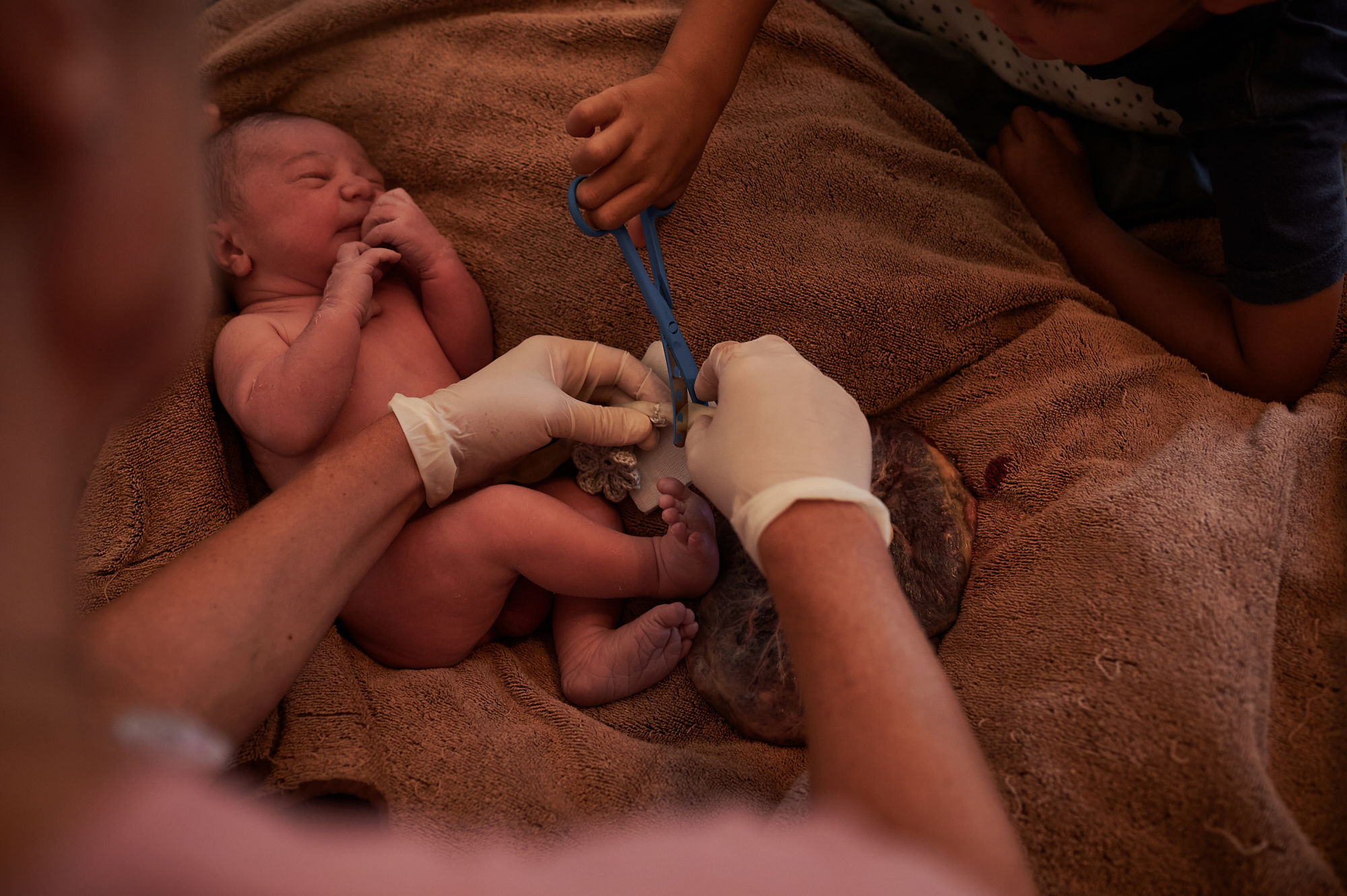
Since new guidelines have been introduced, the mother can/ the parents should decide when to cut the cord. This special moment is important for parents. There are health benefits for the child if it can keep all of its blood after birth.
This is at least one-third more than with children whose umbilical cord is cut early.
If you as parents do not expressly decide to allow the cord to continue pulsate, the hospital may cut the cord shortly after birth without asking.
 For nine months, the baby develops and grows thanks to the nutrients in the blood in its placenta and umbilical cord. The blood is rich in oxygen because the mother breathes, thus optimally enriching the baby's blood with oxygen. In most cases, the blood types of mother and child differ. The oxygen content in the child's circulation depends, among other things, on the mother's healthy diet, her regular exercise, and healthy air. Children of smokers are demonstrably disadvantaged in terms of growth. They are smaller and weigh less.
The transition to independent lung breathing is associated with the cutting of the umbilical cord. To ensure a safe transition, the baby pumps its own blood from the placenta and umbilical cord into its body.
Advertisements encouraging people to donate blood fail to mention that both the blood, because of its stem cells, and the placenta, because of its valuable properties, can be marketed. Both stem cell research and the cosmetics industry are interested in this. Once the process is complete, the umbilical cord appears white and limp. It has ‘stopped pulsating’. This ensures a good supply of oxygen and a higher birth weight for your baby right from the start.
Magazines, trade fairs, and doctors' offices advertise the donation of a child's blood or its storage for possible future use in exchange for money. Parents are usually unaware that this means their child will lose at least one-third of its total blood during birth. This corresponds to a blood donation, which is prohibited for people weighing less than 50 kg and under the age of 18 (Information German Red Cross). The importance of children's blood in the initial situation is undisputed.
04/2026
Translation Deep-L, counter-read Eva-Maria Müller-Markfort